J&B on the Rox: The First Television Series on the Internet
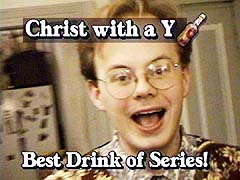
Bloomington is a college town in south-central Indiana, home to Indiana University. In 1992 it had a public-access cable channel, a student population that turned over every few years, and the ordinary mix of rental houses, bars, and municipal buildings that any mid-sized Midwestern campus town carries. On July 7 of that year the access channel aired the first episode of a show called J&B on the Rox. It was shot in a basement on East Cottage Grove. The hosts mixed drinks on camera and talked. There was no budget. The camera was a consumer VHS-C. The edit suite was a Video Toaster and a Mac SE. Three years later the same show put its 85th episode on the World Wide Web as a set of QuickTime files and became the first television series distributed on the internet.
The hosts were Joe Nickell and Bart Everson. Nickell was the bartender, called J. Everson was the editor, called B. Nickell had come to Indiana University from Kentucky, graduated in anthropology and English, and was working service jobs. Everson had learned the equipment while serving community service at the access station after a 1989 streaking arrest on campus. In late May 1992 the two of them sat on a sidewalk and decided a mixed-drink show would give them a repeatable format. The name was a nod to the Scotch. Early episodes asked viewers to mail liquor to 711 East Cottage Grove.
The format did not stay a cooking show. Once they moved and took the camera off the tripod, the material became the town around them: student housing, the post office, friends, dumpster runs, local ordinances, and the ordinary friction of living in a college town in the early 1990s. Episodes had no scripts. Footage was captured, then assembled. The result was a serial record of a small circle of people and the places they moved through. Christy Paxson (XY) and Terry Hornsby (TBlack) became regulars. The show described itself as a serial art-life project that also mixed drinks.
Friction with the station arrived early. Episode 5 carried a segment the Monroe County Public Library blacked out. Later episodes that included genital footage were held and shown censored. In April 1994 the hosts smoked marijuana on the lawn of the Monroe County Courthouse. The clip reached Indianapolis affiliates, The Howard Stern Show, and an MTV news special. The Indiana Governor’s Commission for a Drug-Free Indiana accused the producers of the overt promotion of anarchy. The show kept its Tuesday 11 p.m. slot on Bloomington access and picked up airtime in Indianapolis.
Distribution beyond the local cable plant was slow. Tapes were mailed to other public-access systems. In 1993 a friend, Eric Ost, suggested putting the show on the network. Ost reserved rox.com and set up a page. The producers scheduled the third-season closer for April 1995 and titled it Global Village Idiots. They filmed in pieces because money was short. Everson digitized segments at Indiana University’s Teaching and Learning Technologies Lab, compressed them overnight, and moved the files to a Linux machine at InterSource. The episode went up as short QuickTime downloads. On April 15, 1995, the same half-hour that aired on Bloomington access was available for anyone with a modem and the patience to retrieve it.
Time magazine’s May 1, 1995 issue noted the event. Joshua Quittner wrote that Nickell and Everson’s 85th episode “was simultaneously stored on the Internet, where millions of people worldwide could retrieve it—the first television show broadcast in cyberspace.” A full download took roughly a day on a fast modem of the period, which is why the files were cut into segments. In December 1995 Wired ran a piece that opened “You’ve probably never seen an episode of the best TV show in America” and described the Rox Quarry site at rox.com, where clips and a videotape order page lived.
Production stopped after the third season. Money ran out. Everson and Nickell left Bloomington. Distribution continued. Free Speech TV later carried episodes on satellite. In 2002 the two resumed work at a distance—Nickell in Montana, Everson in New Orleans—and added further episodes. The name shortened to Rox. The producers said the show had become a record of a community rather than a vehicle for two hosts. Episodes remain available on the show’s YouTube channel and at stupidtelevisionshow.com. A 20th-anniversary event was held in Bloomington in 2012.
The technical first is narrow and documented. Earlier experiments had put video on the network; WAX or the Discovery of Television Among the Bees had run on the MBONE in 1993. J&B on the Rox was a continuing series with a public-access schedule that also offered its episodes for on-demand download from a website. That combination is what Time and the producers recorded as the first television series on the internet. YouTube launched ten years later.
The show started as a drink demonstration in a basement in a Midwestern college town and ended its first run as a set of files anyone could fetch. The records of both stages are still online.